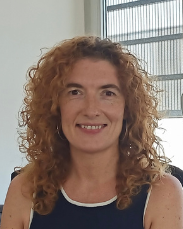
Prof. ANA I. PEREZ NEIRA
CTTC Director
Bio: Her research topic is signal processing for communications and currently she is working in multi-antenna and multicarrier signal processing, both, for satellite communications and wireless systems. She is Director of CTTC (www.cttc.es) and Professor of UPC, where she was Vicerector for Research and created UPC Doctoral School (2011). She is the coordinator of the Network of Excellence on satellite communications, financed by the European Space Agency: SatnexIV-V. She has been the leader of 20 projects and has participated in over 50 (10 for European Space Agency). She is author of more than 60 journal papers (25 related with Satcom) and more than 200 conference papers (20 invited). She has been the Vice-President for Conference of the IEEE SPS (2021-2023). She EURASIP and IEEE Fellow. She is General Chair of ICASSP 2026.
🎙 Talk: AI in SatCom
ℹ️ Abstract: Satellite communications play a crucial role in ensuring the resilience and global coverage required by future networks. However, the satellite channel presents greater challenges compared to terrestrial wireless networks, primarily due to the vast distances involved, which necessitate advanced and innovative technologies. Artificial Intelligence (AI) has been steadily growing as a research field, demonstrating success in various applications, including wireless communication. This presentation will focus on the aspects of satellite communications that we are currently exploring, highlighting the promising potential of AI to address latency, optimize complexity management of megaconstellations, and ultimately enable data centers in space. Additionally, key challenges will be discussed.
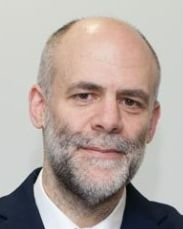
ANGEL ALVARO SANCHEZ
R&D Manager in Thales Alenia Space España & local Chief Engineer for Digital Equipment and systems
Bio: Master Telecommunications Engineer, graduated in 1997 by Politechnic University in Madrid, has more than 25 years experience in the space sector, starting at Alcatel Space as digital equipment designer, he has been responsible for the digital engineering group and technical responsible of digital units for programs like Rosetta, Mars Express or AmerHis. He was appointed Chief Operations Officer, position that he covered 5 years. After the transition from Alcatel to Thales, in 2009 Angel returns to the technical activity and occupies a position within the Technical Direction at Thales Alenia Space Spain. In that position he has been involved in many European R&D projects both under ESA and European Commission.
He is currently leading the Spanish GEO QKD initiative as System Design authority and also shares his technical background as Adjunt Professor in Satellite Communications at Rey Juan Carlos University.
🎙 Talk: QKD GEO: Challenges and Architectural Implications
ℹ️ Abstract: With the turn of the century, quantum technologies have reached a maturity that promises to revolt all the industrial fields. In particular, the unstoppable increase of the data processing capabilities of quantum computers is making closer the day when classical cryptography protocols will become compromised and hence obsolete. In this scenario, quantum cryptography is being intensely explored around the world as a way to maintain privacy and security of communications in a Quamntum Computer ruled world.
Part of this international effort is the Spanish initiative GARBO led by Thales Alenia Space Spain, with the support of Spanish authorities (CDTI), Operators (Hispasat) and other key industrial actors. This initiative targets the definition, development, production and operation of a full space based end to end QKD system supported by a Prepare & Measure payload hosted and operated in a geostationary telecommunications satellite. This initiative complements other ongoing activities as most of them are focused on LEO operation thus allowing the conception of a future hybrid scenario where ground QKD networks will be complemented with both LEO and GEO QKD systems to cover long haul connections.
Space based QKD technology is reaching maturity levels that allow to think in its commercial operation but Quantum Key Distribution (QKD) faces distinctive challenges when deployed in Geostationary Earth Orbit (GEO), necessitating innovative architectural solutions both onboard satellites and at ground stations. The GARBO project aims to address these challenges by designing and testing a specialized system suited for GEO environments. This paper covers the main challenges and particularities of GEO based QKD and how they can be tackled to reach a full operational end to end QKD system that satisfies the commercial needs expressed by an operator.
The first immediate challenge in deploying QKD in GEO is managing the link budget over the vast distance of 44000km. These very high losses are increased as the signal passes through the Earth's atmosphere. Selecting the appropriate wavelength window is crucial to ensuring the survival of Qubits and other optical links despite atmospheric impairments. Initially, free space analysis leans towards favoring 810nm due to hardware advantages, such as free space detectors. However, upon closer examination and taking into account that we are operating at the very limit of key distillation margins, it becomes apparent that atmospheric effects at 1550nm offset this advantage. Therefore, careful consideration must be given to wavelength selection to optimize performance and overcome atmospheric obstacles in GEO QKD implementations.
Other specific challenge is the need for precise pointing mechanisms adapted to the specific requirements of GEO communication. The system requieres large aperture terminals, which are inherently heavier than smaller ones. However, because satellite tracking is unnecessary in this context, designing pointing mechanisms becomes comparatively simpler. This approach enables efficient alignment of the terminals, enhancing the reliability and effectiveness of the GEO QKD system. This topic, as some others that will be described shows how QKD challenges can be compensated by the advantages of having a "fixed" satellite, where we can exchange illumination time for link budget.
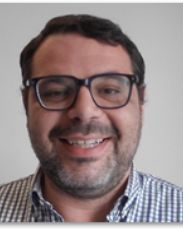
Dr. CHARILAOS KOUROGIORGAS
Technical Director at Atheras Analytics
Bio: Charilaos Kourogiorgas has a PhD on channel modelling for satellite and wireless terrestrial communication systems for which he received an award for outstanding research, following which he was awarded a Marie Curie fellowship in which he studied the applications of Artificial Intelligence (AI) in the operation of next generation high frequency satellite communications. He has been working for over 10 years on research and development in satellite communication systems and has applied different AI and ML techniques for channel prediction, ACM optimisation and resource allocation for flexible payloads and the use of neural nets in transceivers for real-time modulation and coding of digital information. He has published more than 100 journal and conference papers on wireless communications topics.
🎙 Talk: Artificial Intelligence in Satellite Communications: Use Cases and Practical Examples
ℹ️ Abstract: Satellite communications are going through a shifting paradigm for delivering high data rate services through High Throughput GEO satellite communications and NGSO constellations. Multi-orbit constellations along with the deployment of software-defined satellites with flexible payloads are leading to complex systems with multiple degrees of freedom to improve the system efficiency. Artificial Intelligence is a powerful tool which enables decision making, the analysis of problems with multiple variables, automation of tasks and in the last few years through the advancement of generative AI, the generation of data. In this talk, first we will present the different categories of artificial intelligence algorithms going through the different uses that these have and then we will see the main problems that artificial intelligence has been already used for satellite communication systems and the reasons behind their choice. Finally, we will run a practical example of applying Artificial Intelligence algorithms for SatCom systems.
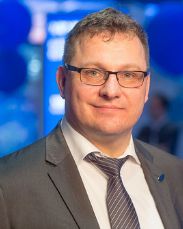
ANDREAS VOIGT
Senior Engineer in Service Operations with EUTELSAT SA
Bio: Andreas works today as Senior Engineer in Service Operations with EUTELSAT SA. As knowledge reference and top level of technical escalation, he oversees theory and practical application of incident, problem and change management in EUTELSAT's main satellite payload control center CSC for geosynchronous satellite communication as well as all onboarding training and knowledge management activities. He also holds a Director position for the Satellite Innovation Group (SIG), representing EUTELSAT. Project Management for new satellite infrastructure in Service Operations and participation in ESA projects (THRIMOS) are ongoing in parallel. Prior to his engagement with EUTELSAT, Andreas worked in the Fraunhofer Institute FOKUS in Germany, participating in various European projects, including COST-232 and SatNEx 2.
🎙 Talk: From Research into Operations: Satellite Communications Knowledge applied in the Industry Core
ℹ️ Abstract: One who was lucky enough to transfer personal interest into a profession | First antenna constructed in 1987 at the age of 16 | From a Fraunhofer research center with all freedom to learn about Satellite Communications and the participation in projects towards customer centric Service Operations with EUTELSAT | How to transit high level theoretical and practical knowledge from research into today's industry |International Cooperation - as known in Research Centre projects - towards multi-corporation interaction in the industry inside SIG for EUTELSAT | Moving from knowledge-based interaction with researchers in projects towards finding solutions for commercial customers in incident, change and problem management on more than 35 geosynchronous satellites today | Base for professional success has always been the high level of knowledge in Satellite Communications (both theoretical and practical), no matter if in research or the industry | The research environment paved today's success in industry operations, can be seen as an incubator for knowledge excellence as in SatNEx, for example.
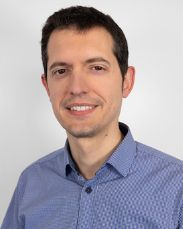
Dr. POL HENAREJOS
Senior Researcher at CTTC
Bio: Dr. Pol Henarejos received the Telecommunication Engineering degree from the Telecommunication Engineering High School from Barcelona (ETSETB) of Technical University of Catalonia (UPC) in May 2009. In 2017, he obtained the Ph.D. degree from UPC, with a distinction Cum Laude. He joined the CTTC in January 2010 in Engineering area and he worked prototyping the physical layer communication technologies using software development. He is an expert in terrestrial and satellite technologies, such as LTE, 5G-NR, DVB-S2X, BGAN or Li-Fi. He participated in European projects such as PHYDYAS, FANTASTIC-5G, ATRIA, 5G-STARDUST. He is the Principal Investigator of the European Space Project TRANTOR. He also worked in the European Space Agency programs (Satnex III, Satnex IV, Satnex V, SATAI) and with industrial contracts. He is also the promoter of the CASTLE Platform, the cloudified architecture for hybrid satellite and terrestrial networks. Currently he is researching on the development of new Artificial Intelligence algorithms for satellite communications, implementation of physical stack of many standards and enabling 5G and 6G technologies on flexible satellite broadband communications.
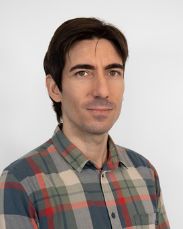
Dr. MARIUS CAUS
Senior Researcher at CTTC
Bio: Dr. Màrius Caus received the M.Sc. and PhD degrees in Telecommunications engineering from the Universitat Politècnica de Catalunya (UPC), in July 2008 and December 2013, respectively. Since 2014 he works as a Researcher at Centre Tecnològic de Telecomunicacions de Catalunya (CTTC). He has participated in several projects within the scope of satellite communications funded by the European Commission, the European Space Agency, the Spanish Ministry of Science and Industrial contracts. He has published papers in international journals and conference proceedings. His main research interests include filter bank based multicarrier systems, signal processing for satellite communications and 6G non-terrestrial networks
🎙 Talk: Performance Evaluation of 3GPP Release 17 Non-Terrestrial Networks: A debrief Abstract
ℹ️ Abstract:
It is widely acknowledged that non-terrestrial networks are poised to play a crucial role in the delivery of 5G services, particularly in regions where technical challenges and economic considerations render traditional terrestrial networks impractical or unprofitable. The basic idea is to integrate non-terrestrial networks into the 3GPP ecosystem. To maximize the synergies with terrestrial networks, the approach followed by 3GPP is to adopt the new radio (NR) air interface over terrestrial and non-terrestrial links. Following Release 15 and 16 study items, the NR-based NTN component has been included for the first time in the technical specifications of Release 17. The first part of the talk will describe the modifications that have been introduced in the 5G protocol stack to enable direct satellite connectivity.
The second part will be particularly directed towards the experimental validation with emulated satellite channels and for field trials with Geostationary satellites. In this part we will dive into the practical aspects of the implementation of the NTN Release 17 from a developer’s point of view. Finally, we will show the metrics and the results of a live NTN communication system using a geostationary satellite.
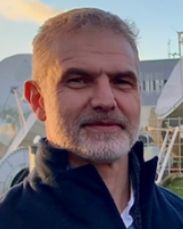
Dr. ALESSANDRO VANELLI
Full Professor at Alma Mater Studiorum – Università di Bologna
Bio: Alessandro Vanelli-Coralli received the Dr. Ing. degree in Electronics Engineering and the Ph.D. degree in Electronics and Computer Science from the University of Bologna, Italy, in 1991 and 1996, respectively, where he is currently a full professor. Since 2022, he has also been a Senior Scientist at ETH Zurich. In 2003 and 2005, he was a Visiting Scientist with Qualcomm Inc. in San Diego, CA, USA. He participates in national and international research projects on wireless and satellite communication systems, and he has been a Project Coordinator and scientific responsible for several European Space Agency and European Commission-funded projects. He is currently the Coordinator of the HE SNS JU 6G-NTN project and the lead for the Vision and Research Strategy task force of the NetworldEurope SatCom Working Group. Dr. Vanelli-Coralli is the University delegate to ETSI, 3GPP, and 6G IA and has served on the organizing committees of scientific conferences. He has received several Best Paper Awards and he is the recipient of the 2019 IEEE Satellite Communications Technical Recognition Award.
🎙 Talk: Exploring the Future: Challenges and Innovations in 6G Non-Terrestrial Network Air Interface Design
ℹ️ Abstract: Following their inclusion in the 5G architecture defined by the 3GPP Release 17 and the announcement of several related commercial initiatives, Non-Terrestrial Networks (NTNs) have emerged from their traditional niche to become a fundamental topic of connectivity for the global academic and industry communities. While the initial inclusion of NTNs in the global 5G architecture was primarily aimed at minimizing the impact of the necessary air interface adaptation for the satellite environment, and 5G-Advanced has focused on the integration of terrestrial and non-terrestrial networks, the evolution toward 6G aims for their native unification for delivering enhanced performance for the identified key use cases. In this talk, building on the newly proposed system architectures for the so-called 3D Multilayered Architecture and the recent outcomes of the HE SNS JU 6G-NTN study, we will explore the evolutionary and revolutionary paths leading to the design of the 6G NTN air interface, highlighting and discussing key research challenges for the native unification of terrestrial and non-terrestrial networks.
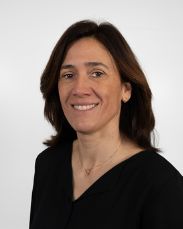
Dr. MONICA NAVARRO
Senior Researcher at CTTC
Bio: Dr. Monica Navarro is a Senior Researcher at CTTC, where she led the Communication Systems Division group from 2016 to 2021 and is currently part of the Direction unit. She received the MSc degree in Telecommunications Engineering from UPC in 1997 and the PhD degree in Telecommunications from the Institute for Telecommunications Research, University of South Australia, in 2002. Over the last 20 years she has lead projects funded by the European Commission, Spanish and Catalan Governments, as well as the European Space Agency (ESA), spanning across 3G to 5G air interface designs, modem prototypes for space applications, virtualized wireless networks or intelligent transport systems. Her primary areas of interest are on digital communications and information processing with applications to wireless communications and positioning.
🎙 Talk: Deep space communications - Telemetry and Telecommand
ℹ️ Abstract: This talk addresses the basic principles and solutions for telemetry and telecommand for space missions. Namely, TT&C, Telemetry, Tracking and Command. We will review bottlenecks of receiver schemes utilized in the transponders for space communications, with special emphasis in synchronization, the impact on receiver architecture introduced by more powerful coding schemes and the context of standardization bodies such as the CCSDS.
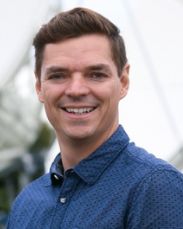
CHRISTIAN HOFMANN
Assistant Professor at University of the Bundeswehr Munich
Bio: Christian HOFMANN is an Professor for Secure Space Communications at the Chair of Signal Processing at the Bundeswehr University Munich. As an enthusiastic scientist and communications engineer, he has worked on several pioneering developments in communications technology and successfully founded a start-up company. In addition, Prof. Hofmann has advised various companies, institutes and agencies in studies and expert reports. Bundeswehr. His main fields of interest are protected satellite communications, narrowband waveforms, Multiple Input Multiple Output (MIMO) satellite communication systems, channel measurement and capacity analysis. He is a member of the VDE/ITG, the IEEE and the Research Center SPACE at his university. Prof. Hofmann is author and co-author of over 50 scientific publications and 5 patents.
🎙 Talk: Waveforms for Narroband satellite IoT
ℹ️ Abstract: The presentation will give a brief overview of satellite-based solutions for the direct connectivity of small devices or sensors in the internet-of-things. The underlying technology is investigated with respect to the used waveforms, the orbits and frequency bands. We will then perform a deep dive into waveform design and performance evaluation.
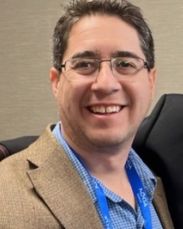
Dr. JUAN DEATON
Executive Director of the WAVE Consortium
Bio: Dr. Juan Deaton is the Executive Director of the WAVE Consortium, where he leads efforts to advance SATCOM standards through collaboration and technical innovation. He is also the Chief Alignment Officer at Alignment Consulting and Engineering, focusing on advising SATCOM companies in digital transformation, business development, and R&D in digital signal processing. Previously, as a senior research scientist at Apothym Technologies Group (ATG), he worked to advance waveform virtualization. His 2022 report, Digital Transformation of Satellite Communication Networks, provided a vision for digitization in the industry. At ATG, he also served as a DIFI Board Member and chaired the Digital Transformation of SATCOM Workshop at MILCOM. Before that, Juan worked with Comtech EF Data on Forward Error Correction Technologies, anti-jam waveforms, and LDPC codes. Earlier in his career, at the Idaho National Lab, he focused on spectrum optimization and emergency communications. Juan holds a Ph.D. and M.S. from Virginia Tech and a BSEE from the University of Idaho. His patented work includes spectrum sharing, wireless emergency communications, and waveform virtualization.
🎙 Talk: From Digitization to Virtualization: DIFI and WAVE in SATCOM
ℹ️ Abstract: Driven by new pressures in the space segment, SATCOM ground networks are undergoing a digital transformation centered on the adoption of the Digital Intermediate Frequency Interoperability (DIFI) and Waveform Architecture for Virtualized Ecosystems (WAVE) specifications. This shift integrates digitization and virtualization, enabling modular, commoditized modem architectures that utilize a standardized digital intermediate frequency (IF) interface. DIFI standardization streamlines the move to common hardware, laying the foundation for WAVE’s virtualized frameworks. By supporting multi-vendor interoperability, these standards foster agile, customizable SATCOM networks that can seamlessly deploy diverse waveforms. Together, DIFI and WAVE enable SATCOM-as-a-Service solutions, enhancing network resilience, agility, and efficiency.
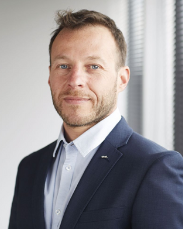
Dr. SANDRO SCALISE
Head of Satellite Networks Department | DLR Institute of Communications and Navigation
Bio: Sandro Scalise graduated in Electronic Engineering specialising in Telecommunications (with honours) from University of Ferrara, Italy in 1997. In 2007, he received his PhD (summa cum laude) from University of Vigo, Spain. Since 2001, he is within the Institute of Communications and Navigation, DLR (German Aerospace Centre), Germany, where, from October 2004 to June 2008, he has been leading the Mobile Satellite Systems Group. Since July 2008, he is leading the Satellite Networks Department. His department deals with the conception, design and demonstration of new satellite systems.
He is IEEE Senior Member and received the "Satellite Communications Distinguished Service Award" from IEEE ComSoc in 2013. Since 2016 he is also lecturing "Satellite Communications" at the Technical University of Munich. He is co-author of more than 70 international journal and conference papers, co-chairman of the biennial Advanced Satellite Multimedia Systems Conference since the 2006 edition and has been active in many standardisation groups within DVB and ETSI.
🎙 Talk: From Integrated to Unified and Resilient 3D Networks
ℹ️ Abstract: This presentation will address one of the envisaged pillars of 6G, namely the unified design of its terrestrial and non-terrestrial components. The main enablers to achieve such ambitious and exciting goal will be highlighted thanks to the most important results of a number of ongoing ESA and EC projects.
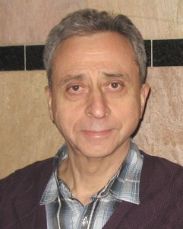
Dr. HARRY LEIB
Professor of the Dept. of Electrical and Computer Eng. at McGill University
Bio: Harry Leib received the B.Sc. (cum laude) and M.Sc. degrees in Electrical Engineering from the Technion - Israel Institute of Technology, Israel in 1977 and 1984 respectively. In 1987 he received the Ph.D. degree in Electrical Engineering from the University of Toronto, Canada. After completing his Ph.D. studies, he was with the University of Toronto as a Post-doctoral Research Associate and as an Assistant Professor. Since September 1989 he has been with the Department of Electrical and Computer Engineering at McGill University, where he is now a Full Professor. His current research activities are in the areas of Digital Communications, Wireless Communication Systems, Global Navigation Satellite Systems, Detection, Estimation, and Information Theory.
Dr. Leib was Editor for the IEEE Transactions on Communications 2000-2013, and Associate Editor for the IEEE Transactions on Vehicular Technology 2001-2007. He was a guest co-editor for special issues of the IEEE Journal on Selected Areas in Communication on “Differential and Noncoherent Wireless Communication” 2003-2005, and on “Spectrum and Energy Efficient Design of Wireless Communication Networks” 2012-2013. Since 2017 he has been the founding Editor-in-Chief of AIMS Electronics and Electrical Engineering Journal.
🎙 Talk: Tensor concepts for multi-domain communication systems
ℹ️ Abstract: Future communication systems are envisaged to provide complex services requesting the transmission of high information rates with excellent reliability, while being constrained to operation with limited resources. A key to achieving such capabilities is the exploitation of opportunities offered by a variety of information transmission domains. Such domains can include space, time, frequency, users, code sequences, as well as transmission media such as terrestrial and satellite based communication systems. Tensors provide mathematical tools for handling such complex systems. Our work presents a unified tensor framework for representing, designing, and analyzing multi-domain communication systems. We show how tensors can be used to represent multi-domain communication systems, leading to joint domain transmission and reception techniques, and a better understanding of the mutual effects between various information transmission domains. Furthermore, we introduce the tensor channel and analyze its Shannon capacity under a variety of constraints, revealing the information transmission capabilities of such multi-domain communication systems. The main objective of this presentation is to introduce the subject of tensors as applied to communication systems, and overview the work done in the speaker’s research group in this area.
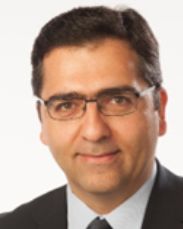
Dr. NADER ALAGHA
Senior Communications Systems Engineer at ESA
Bio: Nader Alagha received his Ph.D. Degree in Electrical and Computer Engineering from McGill University, Montreal, Canada. He is currently with the Electrical Engineering Department of the Technical Directorate at European Space Agency Research and Technology Centre (ESTEC) in The Netherlands. Since 2020, among other activities, he has been working on satellite system preliminary designs for air traffic tracking independent of GNSS. Nader Alagha has contributed to several standardization technical groups including the ITU, DVB and ETSI. He is also ESA Technical manager of Satellite Network of Experts (SATNEX) since 2015.
Dr. Alagha has been executive committee member of AIAA Communication Systems Technical Committee. He has served as the co-chair Systems Conference (ICSSC) since 2018.
🎙 Talk: Opportunities and challenges of space-based air traffic tracking
ℹ️ Abstract: The World Radiocommunication Conference (WRC) in 2015 made a global primary allocation of frequency band 1087.7 to 1092.3 MHz for satellite reception of Secondary Surveillance Radar (SSR) messages transmitted by aircraft transponders. The feasibility of detecting aircraft broadcast signal in this frequency band has already been proven using an experimental payload hosted on the ESA Proba-V satellite since 2014.
Over-the-air signal detection results collected from several space assets indicate challenges as well as possible directions to enhance the satellite based SSR message reception. In particular, it is challenging to detect aircraft in highly congested airspaces given the high level of interference seen by the satellite is essential to maintain the overall service quality.
This talk aims to provide an overview of satellite systems to the reception of Secondary Surveillance Radar such as ADS-B and MODE-S broadcast message and explains opportunities and challenges of space-based air traffic tracking.